
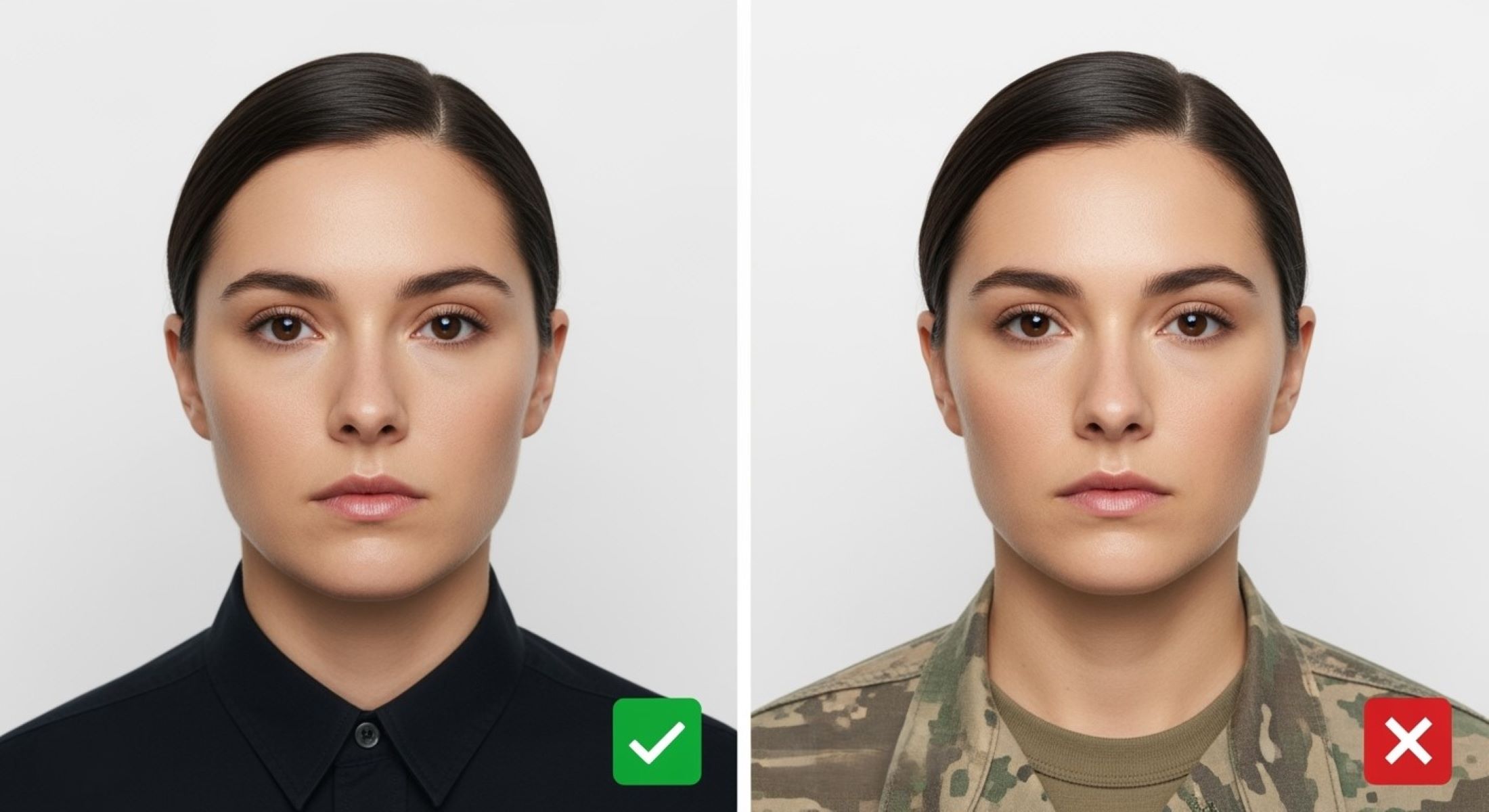
Getting a U.S. passport photo might sound like a simple errand—you pop into a pharmacy, pose for a few seconds, and walk out with two little pictures. Easy, right? Well, not so fast. The truth is, many people end up with rejected passport photos simply because of what they were wearing. Believe it or not, your outfit can make or break your application. If you’ve ever wondered “What should I wear in a U.S. passport photo?” you’re not alone. The U.S. Department of State has a surprising number of rules when it comes to passport pictures. Don’t worry, though—we’re breaking it all down for you. This guide will cover every do and don’t, complete with tips, outfit suggestions, and examples to make sure your photo gets approved the first time around.
Why Your Outfit Matters in a Passport Photo
Your passport isn’t just another form of identification—it’s your personal ticket to exploring the world. Every time you present it at airport security, border control, or during international travel, the photo inside needs to clearly represent you. If your clothing blends into the background or draws attention away from your face, it can compromise the clarity and recognition of your image. Choosing the right outfit ensures that your face remains the focal point, which is exactly what authorities need for quick verification.
Clothing that is too light, overly patterned, or flashy can actually cause problems. White tops, for instance, often merge with the mandatory plain white background of U.S. passport photos, creating a “floating head” effect that can confuse automated passport systems. Similarly, shirts with bold stripes, large logos, or graphic designs can distract the viewer and take attention away from your facial features. Your outfit should complement your appearance rather than compete with it, helping you look natural, clear, and professional.
Even small details in clothing can make a big difference. High collars, hoods, or bulky layers may obscure your neck and jawline, altering the way your face is captured. Accessories like hats, scarves, or large jewelry can cast shadows or partially hide your features, which may lead to your photo being rejected. Remember, passport photos are meant to provide a precise and unaltered representation of you—so simplicity and clarity in clothing are essential to meet these requirements.
Finally, consider the long-term impact of your outfit choice. Your passport photo is valid for up to ten years, meaning the image will be referenced repeatedly throughout your travels. A poorly chosen outfit can make you look unrecognizable or unprofessional, potentially causing delays at border checks or even additional scrutiny by security personnel. Treat your clothing as an important part of the passport photo process, aiming for a balance of contrast, simplicity, and timelessness to ensure smooth international journeys.
General Dress Code Rules for U.S. Passport Photos
- Wear normal, everyday clothing that represents how you usually look.
- Do not wear uniforms of any kind, including military, police, or service attire.
- Avoid costumes, theatrical outfits, or any clothing that makes you look like a character.
- Stay away from camouflage patterns, as they are considered military-style clothing.
- Refrain from wearing white or very light-colored tops because they may blend with the plain white background.
- Avoid clothing with flashy logos, large text, or distracting designs that draw attention away from your face.
- Do not wear hats, caps, beanies, or bandanas unless they are required for medical or religious purposes.
- Religious head coverings like hijabs, turbans, or yarmulkes are allowed, but your full face must remain clearly visible.
- Medical coverings such as bandages or dressings can be worn if necessary, with proper documentation.
- Do not wear sunglasses or tinted lenses, as your eyes must be clearly visible.
- Regular eyeglasses are also not allowed, except in rare medical cases with a signed doctor’s note.
- Avoid accessories such as headphones, earbuds, or decorative headbands in the photo.
- Jewelry is permitted, but it should not cover facial features or create glare.
- Keep makeup natural—avoid heavy, theatrical, or reflective cosmetics.
- Hair should be styled so it does not cover the eyes or obscure facial features.
- Make sure your clothing provides contrast against the white background to avoid blending in.
- Do not wear uniforms or clothing resembling law enforcement or military attire, even if it’s part of your job.
- The overall goal is to ensure your photo looks like a clear, natural, and accurate representation of you.
Best Colors to Wear for a U.S. Passport Photo
| Category | Recommended Colors | Why It Works | Colors to Avoid | Why to Avoid |
| Dark Solids | Navy, Black, Forest Green | Provides strong contrast with the white background, making your face stand out clearly | White, Beige, Light Gray | Blends into the background, making the photo look washed out |
| Medium Shades | Burgundy, Teal, Gray | Adds color without overwhelming your face; looks professional and timeless | Neon Colors | Reflects light, can distort your natural skin tone and facial features |
| Earth Tones | Brown, Olive Green, Taupe | Creates a natural, balanced look that emphasizes your face | Busy Patterns & Stripes | Distracts the viewer and draws attention away from your facial features |
| Professional Look | Charcoal, Deep Blue, Maroon | Enhances contrast and adds a polished, professional appearance | Flashy/Shiny Fabrics | Can reflect light and create glare, interfering with facial recognition |
| Timeless & Neutral | Slate Gray, Forest Green, Navy | Colors that age well, keeping the photo relevant for years | Logos or Text on Clothing | Distracts and can be misinterpreted as non-standard or inappropriate |
What Tops Work Best for Passport Photos
Since passport photos capture only your head and shoulders, the top you choose plays a surprisingly important role in how the final image turns out. Your shirt or blouse frames your face, highlights your neckline, and contributes to the overall clarity and professionalism of the photo. Wearing clothing that is too casual, distracting, or revealing can shift focus away from your face, which is exactly what you want to avoid. Choosing the right top ensures that your facial features are the central point of attention, making the photo meet the strict standards of the U.S. Department of State.
Collared shirts or blouses are among the best options for passport photos because they provide structure and a polished appearance. A crisp collar can naturally frame your neck and jawline, giving your face more definition. Blouses in solid, contrasting colors can complement your skin tone without overpowering it, ensuring the focus remains on your eyes and facial features. This style works well for both men and women and is versatile enough for casual, business, or professional settings.
Crewneck sweaters or simple solid t-shirts are also acceptable if you prefer a more relaxed look. These tops are simple and neat, avoiding unnecessary visual distractions while maintaining a clean silhouette. Solid colors work best, as busy patterns or graphics can draw attention away from your face. Simple dresses can also be suitable for women, provided they are modest and in a color that contrasts with the white background. Dresses with bold patterns or low necklines are best avoided to maintain clarity and professionalism in the image.
There are certain types of tops that should always be avoided for passport photos. Tank tops, spaghetti straps, and strapless tops can give the impression of being underdressed, while hoodies or bulky garments with large hoods can distort your neckline and the natural shape of your shoulders. Additionally, tops with visible logos, text, or patterns are distracting and may violate passport photo rules. The key is to choose clothing that highlights your face, provides clear contrast against the background, and keeps the overall look simple, professional, and timeless.
Jewelry and Accessories: Keep It Simple
- Wear small earrings or studs that are subtle and do not draw attention away from your face. Simple pieces help maintain focus on your facial features while adding a touch of personal style.
- Thin necklaces are acceptable as long as they do not cover your neckline or distract from your face. Minimalistic chains or pendants work best in passport photos.
- Facial piercings, such as nose rings or eyebrow studs, are allowed as long as they do not obscure your facial features. Ensure that your eyes, eyebrows, and jawline remain clearly visible.
- Avoid oversized earrings or flashy jewelry that can reflect light from the camera flash. Large pieces can create glare, shadows, or reflections that interfere with the photo’s clarity.
- Big statement necklaces should be avoided because they distract from your face. Accessories should complement your appearance rather than dominate it.
- Sunglasses, tinted glasses, or any eyewear that obscures your eyes are strictly prohibited, even if they are part of your daily look. Clear, unobstructed eyes are a requirement for passport photos.
- Keep all jewelry minimal and understated, aiming for balance and simplicity. Your accessories should enhance your look subtly without taking the focus away from your facial features.
- Avoid any reflective or shiny items near your face, such as metallic headbands, large hairpins, or sequined clothing that could create glare in the photo.
- Remember: if your jewelry or accessories are more noticeable than your face, it’s too much. The goal is to make your face the centerpiece of the photo, ensuring it is clear, professional, and compliant with passport regulations.
Can You Wear Glasses in a Passport Photo?
| Category | Rule | Explanation | Exceptions | Tips |
| Prescription Glasses | Not allowed | Glasses can reflect light or create glare, obscuring your eyes | Only allowed with a signed doctor’s note | Remove glasses before taking the photo to avoid delays |
| Sunglasses | Not allowed | Covers eyes, making identification impossible | None | Never wear sunglasses in passport photos |
| Tinted Glasses | Not allowed | Can distort your natural eye color and facial features | Rare medical exception with documentation | Always use clear-lensed glasses if medically necessary |
| Medical Exceptions | Allowed | Only if a doctor confirms you cannot remove glasses for medical reasons | Must include signed note | Ensure your eyes remain fully visible; frames should not cover eyes |
| Everyday Wear | Not applicable | Even if you wear glasses daily, they cannot appear in the photo | Only valid if medical exception applies | Plan to take your photo without glasses; carry contacts if needed |
Head Coverings: Rules You Need to Know
When it comes to passport photos, the rules about head coverings are very strict because the purpose of the picture is to clearly identify you. Generally, head coverings of any kind are not permitted unless there is a valid religious or medical reason. This means that fashion accessories such as hats, scarves for style, or casual caps cannot be worn under any circumstances. Authorities need to see your entire face without obstruction to ensure accurate recognition in official checks.
However, there are important exceptions that allow people to wear certain coverings if they are part of their daily religious practice or are medically necessary. Items such as hijabs, turbans, yarmulkes, and other faith-related coverings are permitted as long as they do not obscure the face. Similarly, medical bandages, dressings, or head coverings used for health-related conditions can also be worn, but in these cases, official documentation may be required to explain the necessity.
It is also acceptable to wear wigs or hair extensions, provided they don’t cover essential facial features. The rule focuses mainly on visibility, so as long as the chin, forehead, and both ears are clearly shown, these items are not considered violations. On the other hand, casual fashion items like baseball caps, beanies, or wide scarves worn just for style are strictly prohibited. Accessories such as headphones or headbands are also not allowed, as they alter or obstruct the natural appearance of the head and face.
If you do wear a permitted head covering, it is important to position it so that your entire face is visible from ear to ear and from the bottom of your chin to the top of your forehead. The covering must not cast shadows or create glare that makes your facial features unclear. Keeping these details in mind will ensure that your passport photo complies with international standards and avoids rejection during processing.